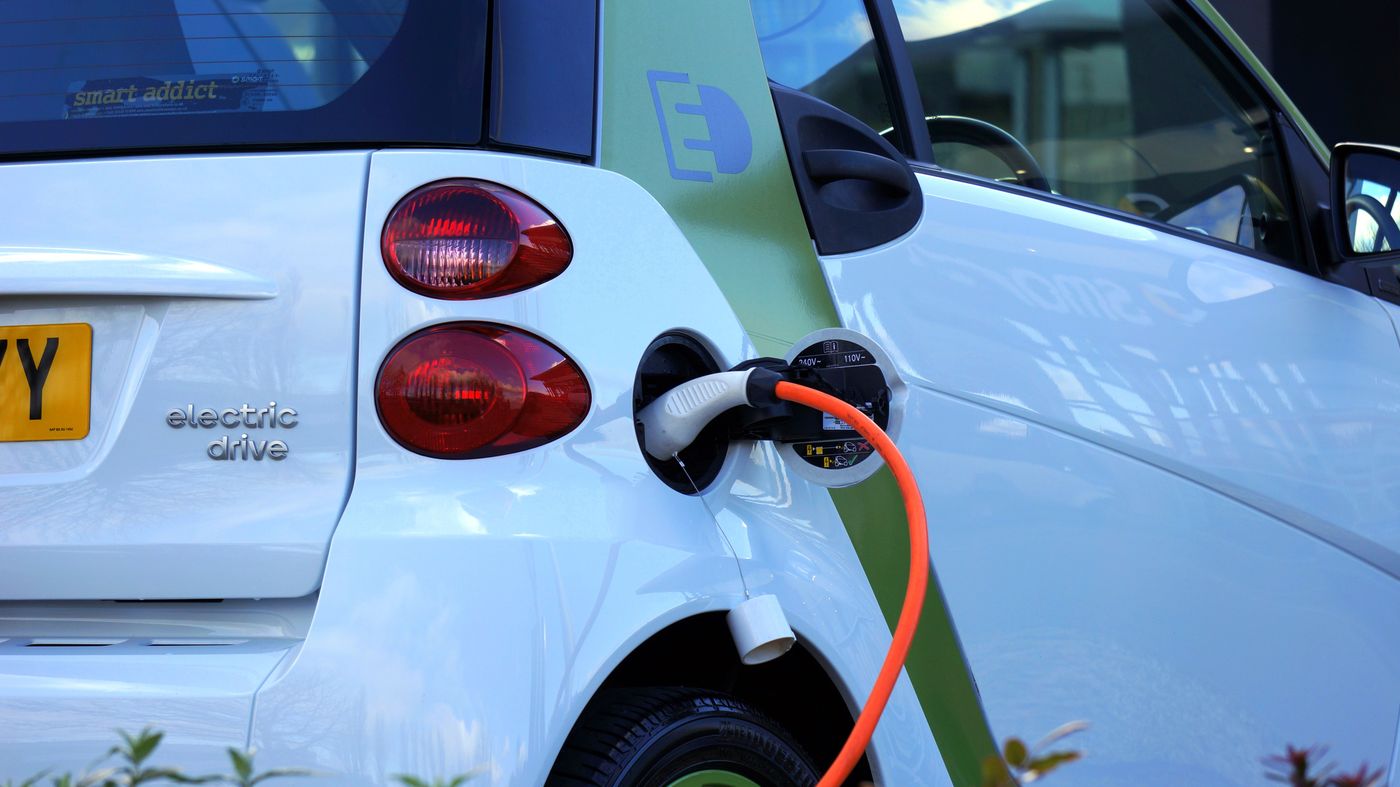
Electric vehicles in South Africa:
the infrastructure problem nobody is solving fast enough.
South Africa has 445 public charging stations, 7,000–10,000 electric vehicles, and an electricity grid that cannot reliably power either. A new Chinese electric bakkie costs R612,000. Here is an honest look at where we actually are — and what needs to change before the rest of us should consider buying one.
The conversation about electric vehicles in South Africa has a gap problem. The gap between the aspiration — cleaner transport, energy independence, lower running costs — and the reality of buying an EV here in 2026.
As of early 2026, South Africa has roughly 445 public charging sites with approximately 650 chargers and 1,200+ connectors, up from around 200 stations in 2022. By the end of 2025, an estimated 7,000–10,000 electric vehicles are on South African roads. For context, the United Kingdom — a country with roughly the same land area as the Western Cape — has over 60,000 public charging points.
The newest entrant to the South African EV market is the Riddara RD6 — a Chinese all-electric bakkie starting at R612,000. It joins a market where major barriers include high purchase costs, an unreliable energy supply, insufficient charging infrastructure, and fiscal and trade-related constraints. The Riddara is a real product, and R612,000 is a real price. Those barriers are also real.
This is not a pessimistic article. The trajectory is encouraging and some genuinely clever infrastructure thinking is happening. But the honest answer to "should I buy an EV in South Africa in 2026?" is: it depends heavily on who you are, where you live, and what you drive for.
// South Africa EV market · 2026
The infrastructure problem explained honestly
// Chapter 02 — Why the charging network is where it isThe chicken-and-egg problem of EV infrastructure is real and well documented. Charging networks need EVs to be profitable. EVs need charging networks to be viable. At the Enlit Africa session, panelists agreed that the cost of setting up public charging infrastructure remains a barrier — installing a single station can cost anywhere from R500,000 to R2 million. Reaching profitability would likely require a fleet of at least 100,000 EVs, a threshold South Africa is nowhere near.
Winstone Jordaan, Director of GridCars — broadly acknowledged as one of the pioneers in the EV charging space in South Africa — told the Enlit audience that at present "there's just no business case." That is not defeatism. It is an honest description of where the economics are right now.
GridCars operates around 60% of South Africa's public charging capacity — approximately 350 stations. Rubicon runs 200+ stations focused on major cities and highways. Zero Carbon Charge covers 150+ stations at premium locations including malls and hotels. Tesla Superchargers, opening to non-Tesla EVs in 2026, add 50+ stations to the mix.
The Western Cape and Gauteng account for 78% of all public charging points. If you live in Limpopo, the Eastern Cape, or the Northern Cape and want to drive long distances, the network is not yet adequate for comfortable cross-province travel in most EVs.
The Eskom problem
// Chapter 03 — Charging from an unreliable gridThe obvious objection to EVs in South Africa has always been Eskom. If the grid cannot reliably power homes and businesses, what happens when you plug in your R612,000 vehicle?
Eskom, the national power utility, faces operational inefficiencies and financial constraints, making it difficult to provide reliable energy for an expanding EV charging network. This is the polite version. The practical version is that loadshedding — which has cost South Africa billions in economic output over the past decade — creates genuine anxiety about committing to a vehicle that requires electricity.
The more interesting development is that loadshedding is also, counterintuitively, driving EV adoption in some segments. Motoring experts say the spike in petrol and diesel costs is shifting attention toward electric vehicles and hybrid cars, especially as running costs come under pressure. And Vehicle-to-Load (V2L) technology — which lets EVs power appliances during loadshedding — is making certain EVs genuinely useful as backup power sources. The BYD Atto 3's battery, for example, can power a typical household for several days.
The grid-independent answer is the most compelling: CHARGE's infrastructure is an off-grid microgrid — solar generation, battery storage, and fast-charging infrastructure, operating independently of Eskom. No grid connection. No transmission constraints. In the first month of operations across the N3 sites, CHARGE's infrastructure delivered 7,470 kWh of energy, generated off-grid, on-site, without drawing a single unit from Eskom.
CHARGE plans to build 120 solar-powered stations for passenger vehicles, spaced roughly 150km apart along major routes like the N1 and N3. Two new stations are scheduled to open in 2026 — one in the Free State and another in KwaZulu-Natal. This is the infrastructure model that actually makes sense for South Africa — not dependent on Eskom's reliability, not exposed to Eskom's tariff hikes, and financially viable because it controls its own energy cost.
The four barriers — in plain language
// Chapter 04 — What is actually stopping EV adoptionWho should actually buy an EV right now
// Chapter 05 — The honest answerThe honest answer is not "everyone" or "nobody." It is specific.
Buy an EV now if: You live in Cape Town or Johannesburg. You have home solar or are willing to install it. Your daily driving is under 200km. You can charge overnight. You can absorb the upfront cost premium. You do long-haul trips rarely enough that planned charging stops are acceptable. In this profile, an EV makes clear financial and practical sense in 2026.
Wait if: You drive long distances regularly across provinces. You rent and cannot install a home charger. Your daily distance approaches or exceeds most entry-level EV ranges. You live outside the Western Cape or Gauteng and do not have reliable public charging on your regular routes. For this profile, a petrol-hybrid may be the practical middle ground for the next two to three years.
The solar angle explains why the public network gaps are less catastrophic than the raw numbers suggest. A home solar plus EV combination is genuinely energy-independent for daily driving. The public network only becomes critical for that Joburg-to-Cape Town run — and even then, the corridor coverage on the N1 is improving, if not yet seamless.
// Building a platform for EV infrastructure or clean energy?
The infrastructure layer needs digital infrastructure too.
Booking platforms, fleet management systems, charging network dashboards, payment integration, and AI-assisted route planning for EV corridors — Forge Vertical builds the digital layer for the physical infrastructure problems South Africa is solving.